
Twenty years of better trips, line by line
Measure T raises about $14 million a year from a half-cent sales tax. Here is where every cent goes, what you’ll see first, and the rules that keep it honest.
Where the buses and bike routes go
Four bus lines that reach nine in ten Port Wren homes will run every 10 minutes. Protected bike routes link every public school, and the Wren Street Bridge finally ties Eastbank to downtown.
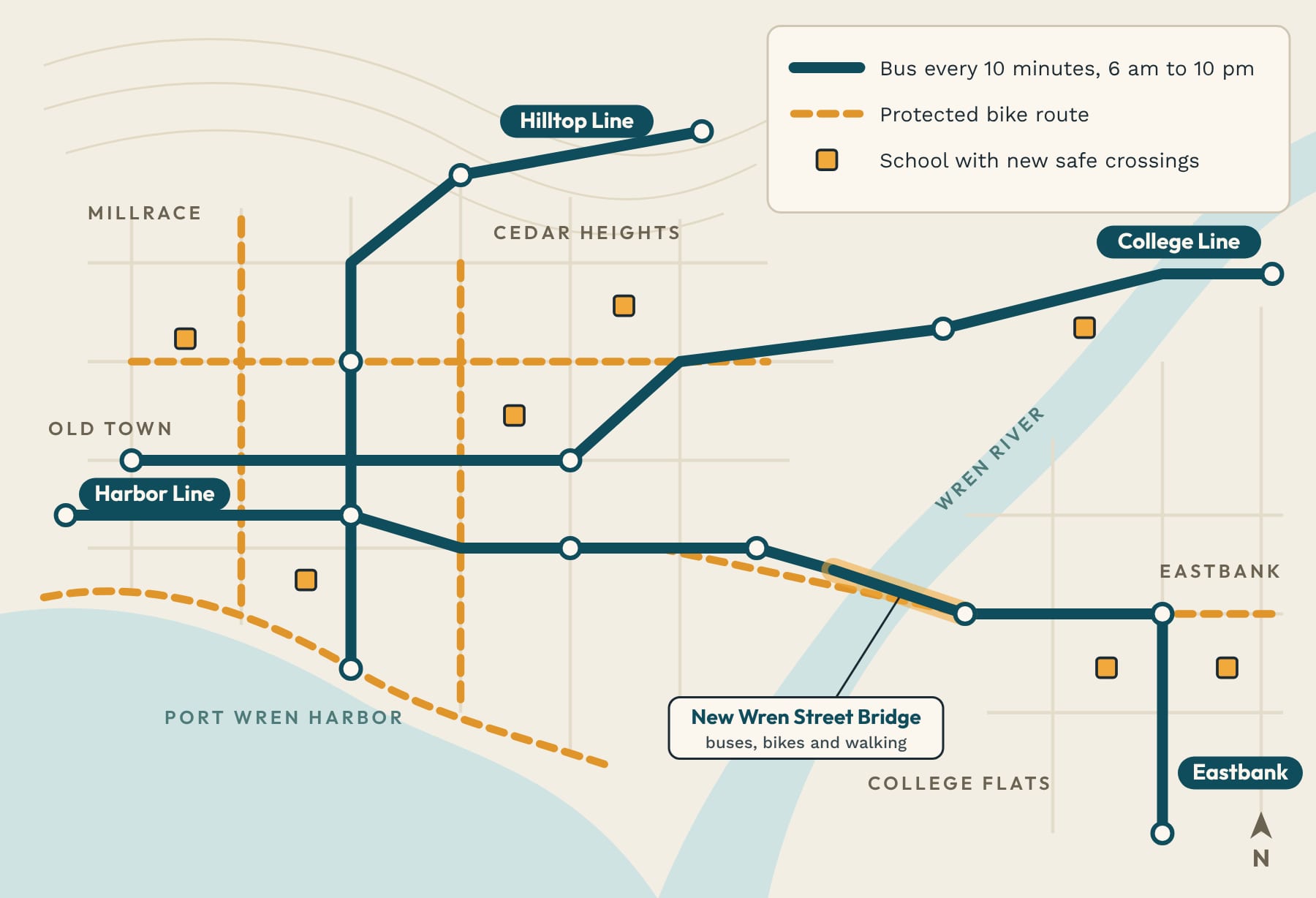
Routes are shown as planned. Exact stops are set after public hearings in each neighborhood.
Frequent buses
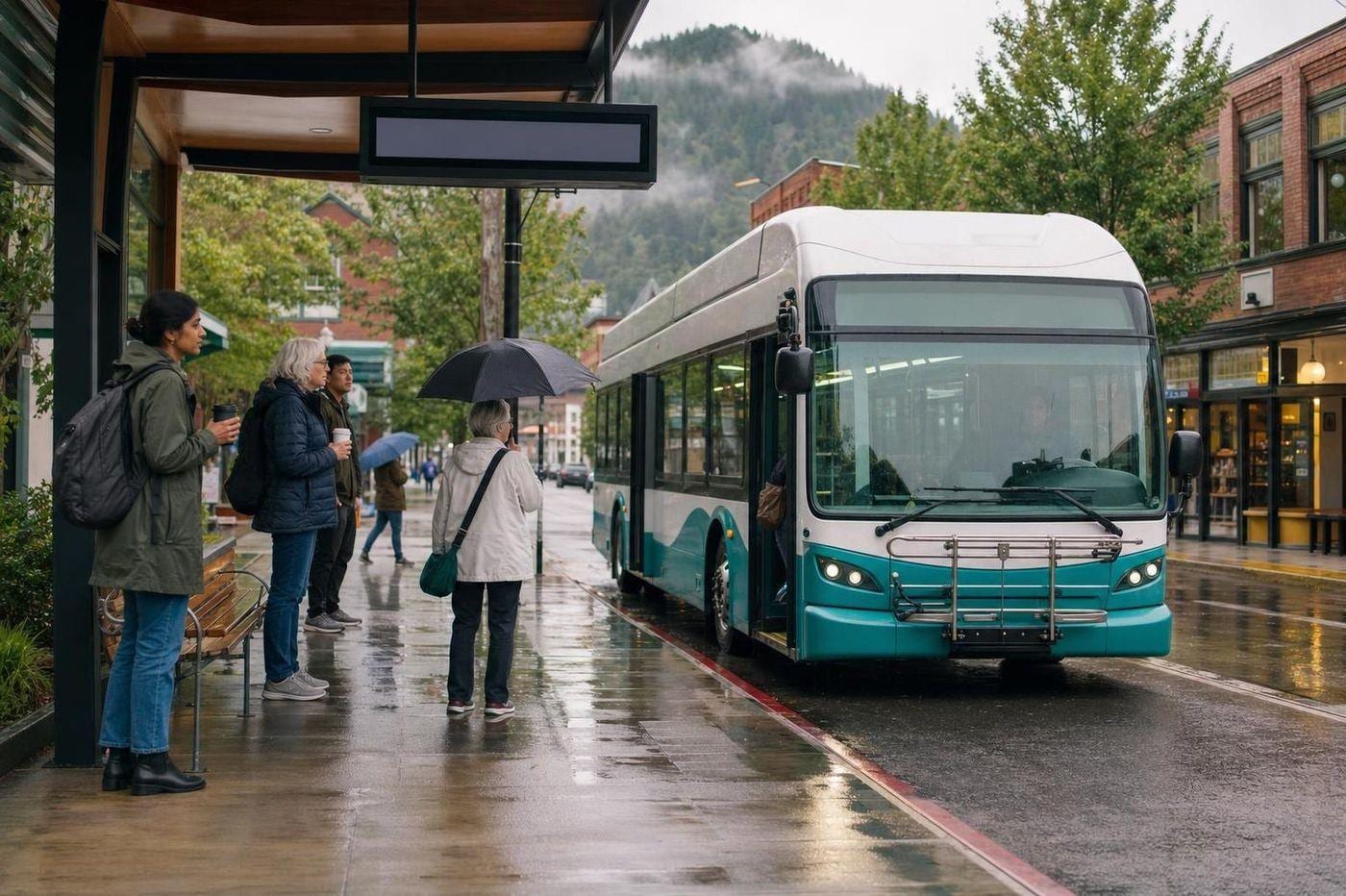
38 cents of every dollar. Today most Port Wren buses come every 30 minutes and stop at 7 pm. Measure T turns the four busiest lines into show-up-and-go service and keeps it running into the evening.
- Harbor, Hilltop, College and Eastbank lines every 10 minutes, 6 am to 10 pm, seven days a week
- 24 new electric buses, replacing diesel buses that are past their life
- Arrival screens and shelters at the 100 busiest stops
- Free rides for everyone 18 and under
Sidewalks and safe crossings
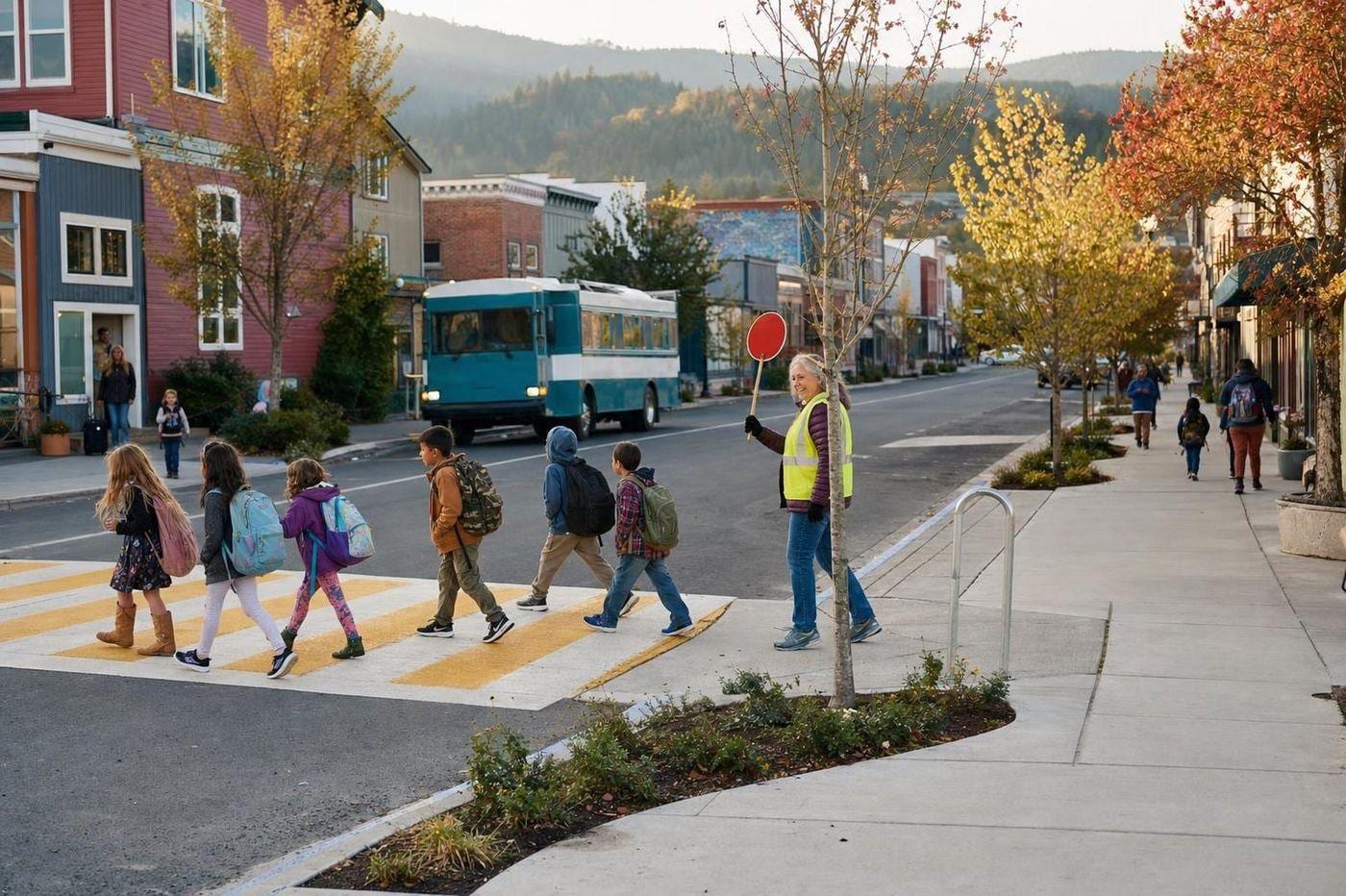
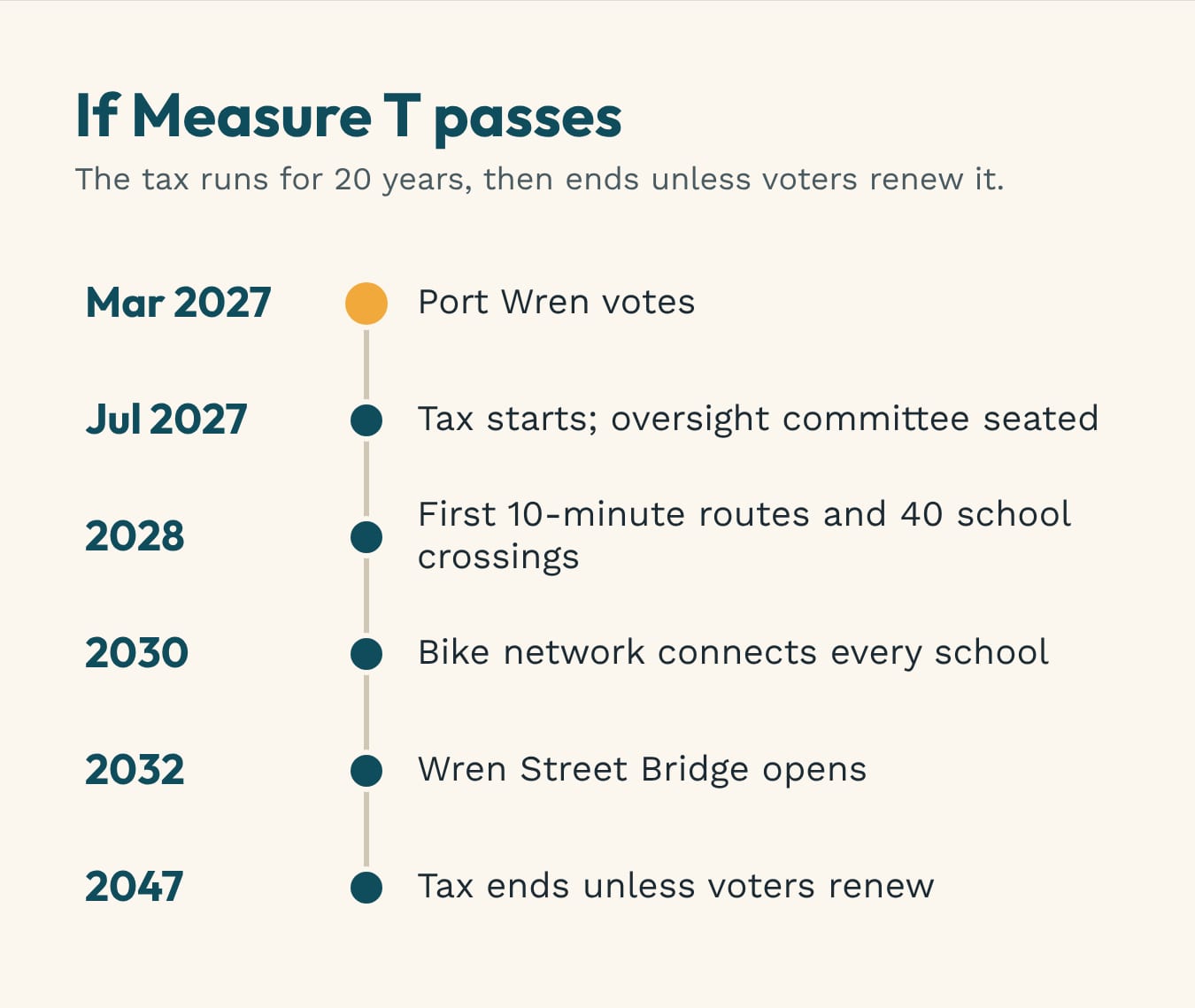
18 cents of every dollar. Fourteen Port Wren schools have no safe way to cross the street outside their front door. Those come first: raised crosswalks, flashing beacons and curb ramps at 40 crossings within two years.
- Missing sidewalks filled in on the routes children walk most
- Curb ramps at every corner the city rebuilds
- Brighter street lights at bus stops
Fix-it-first street repair
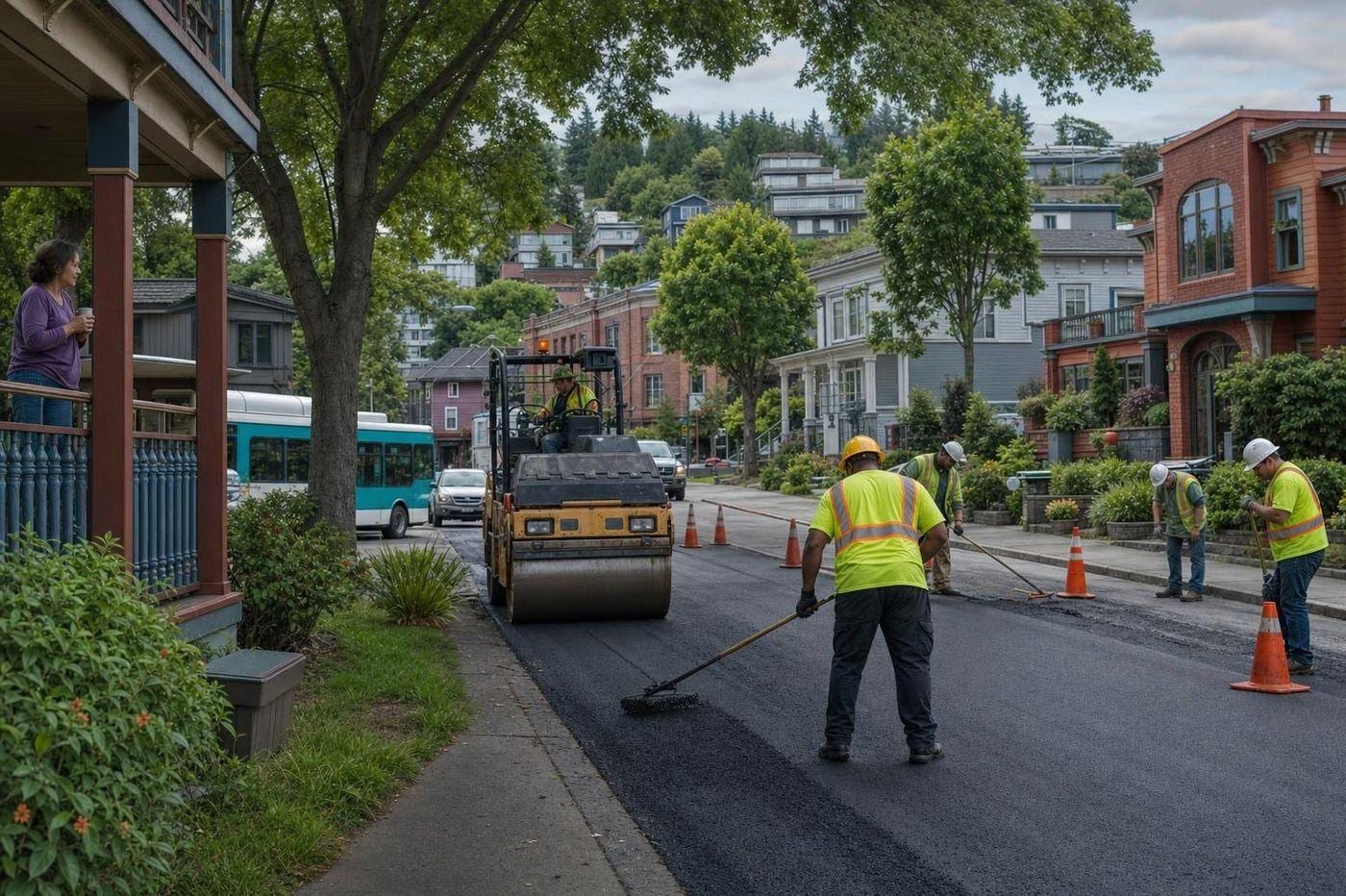
24 cents of every dollar. Port Wren’s repair backlog has grown to $190 million because repaving waits on state grants. Measure T gives crews a steady budget, so the worst streets get fixed on a schedule you can look up.
- Potholes reported online filled within 72 hours
- The 60 worst-rated miles repaved in the first ten years
- Storm drains cleared before the rainy season
Protected bike routes
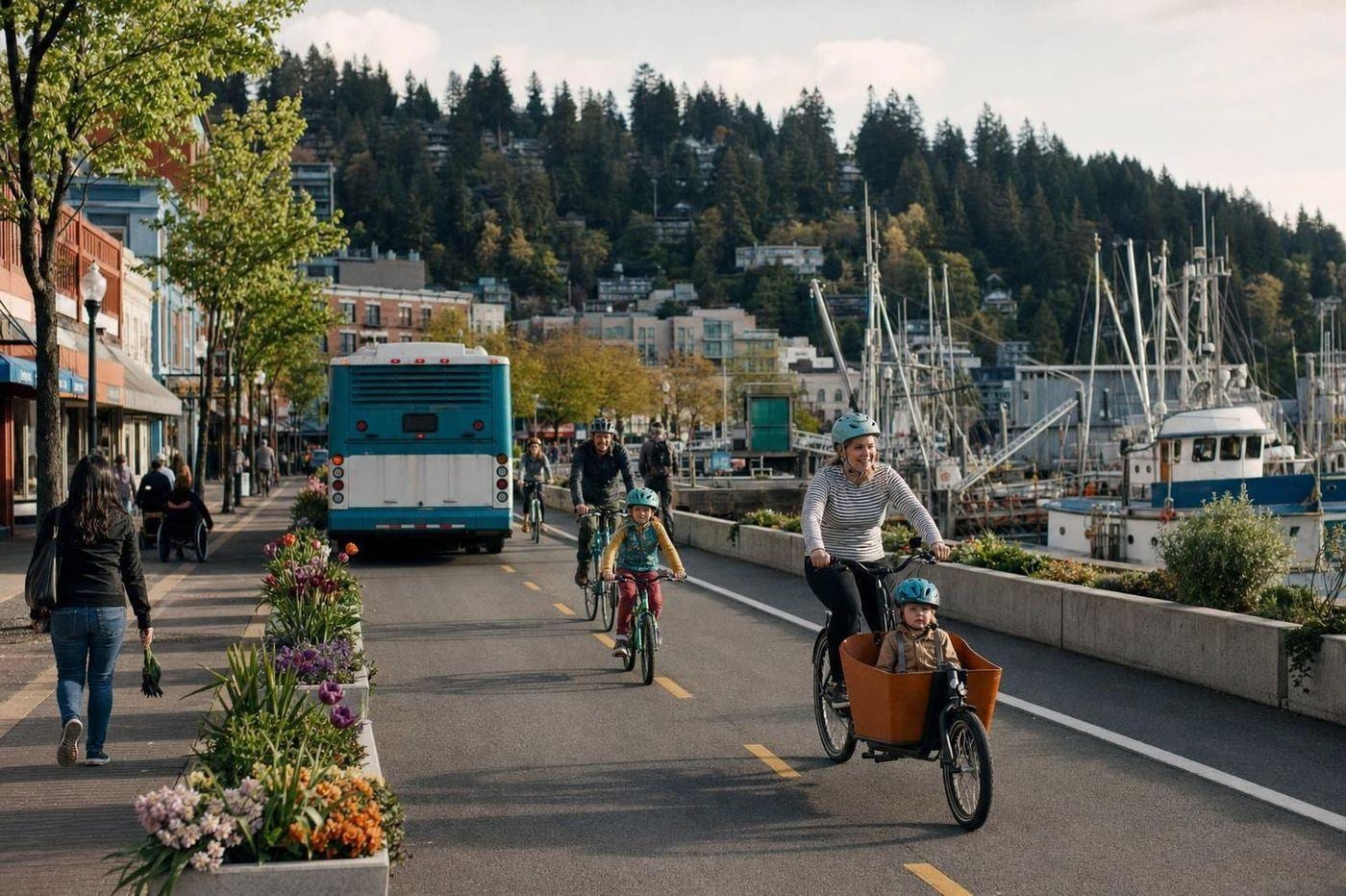
8 cents of every dollar. 22 miles of bike routes, separated from traffic by curbs and planters, so a ten-year-old or a seventy-year-old can ride to school, the harbor or the market.
The Wren Street Bridge
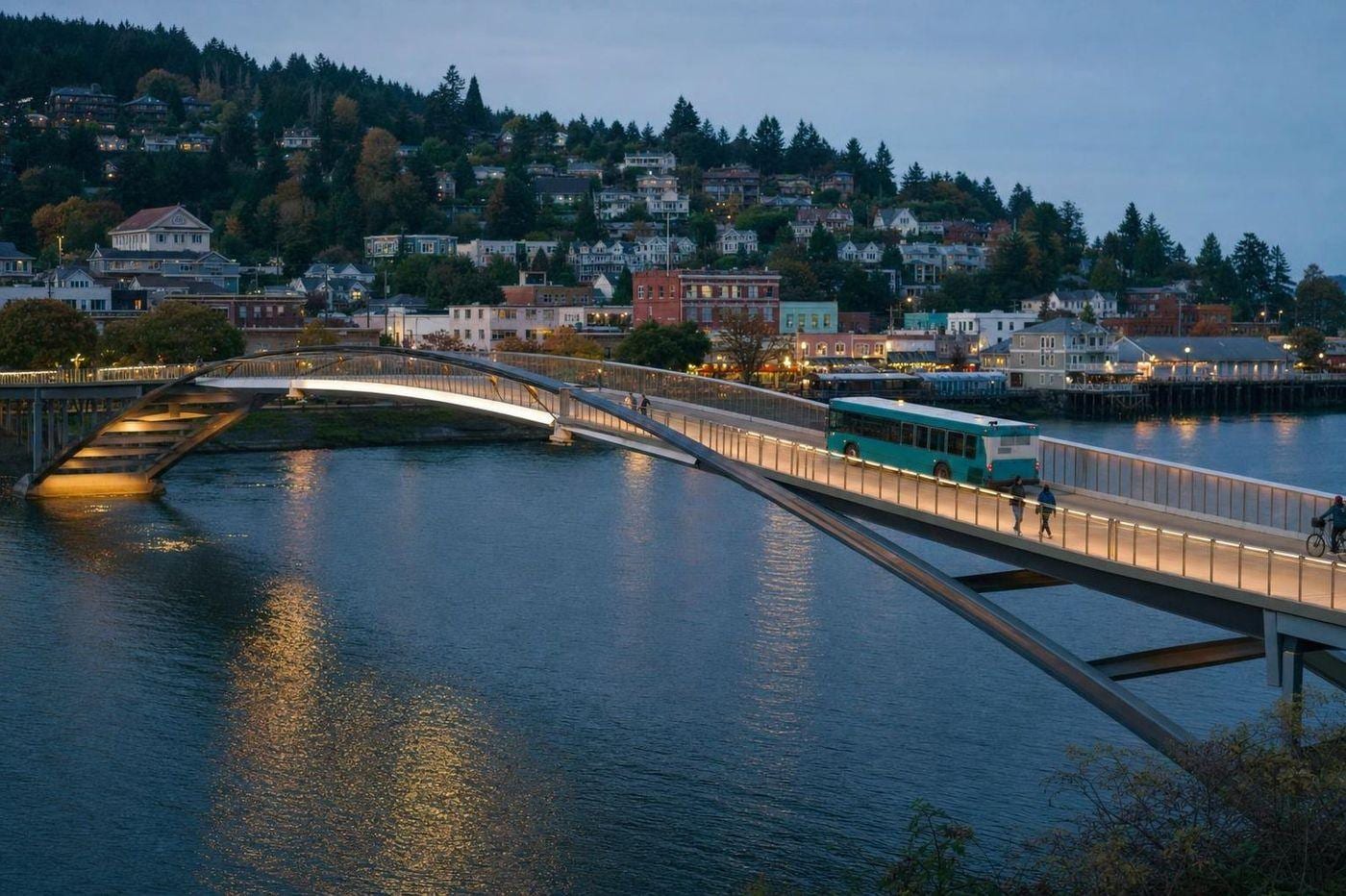
10 cents of every dollar, matched two to one by state and federal grants that need local money to unlock. The bridge carries buses, bikes and people on foot, not private cars, and cuts the trip from Eastbank to downtown from twenty minutes to four.
The plan at a glance
These shares are written into the measure. Changing them takes another vote of the people.
| Program | Share | Over 20 years | First you’ll see |
|---|---|---|---|
| Frequent buses | 38% | $106 million | Harbor and Hilltop lines every 10 minutes in 2028 |
| Street repair | 24% | $67 million | Pothole crews on the job the first summer |
| Sidewalks and crossings | 18% | $51 million | 40 school crossings by fall 2029 |
| Wren Street Bridge | 10% | $28 million | Design and hearings in 2028 |
| Protected bike routes | 8% | $22 million | Front Street harbor route in 2028 |
| Oversight and audits | 2% | $6 million | Citizen committee seated in July 2027 |
Want to know who checks the spending? See how Measure T stays accountable.